
From Traditional Manufacturing to Infrastructure Leadership: How PMW International is Capturing Malaysia's Next Growth Wave
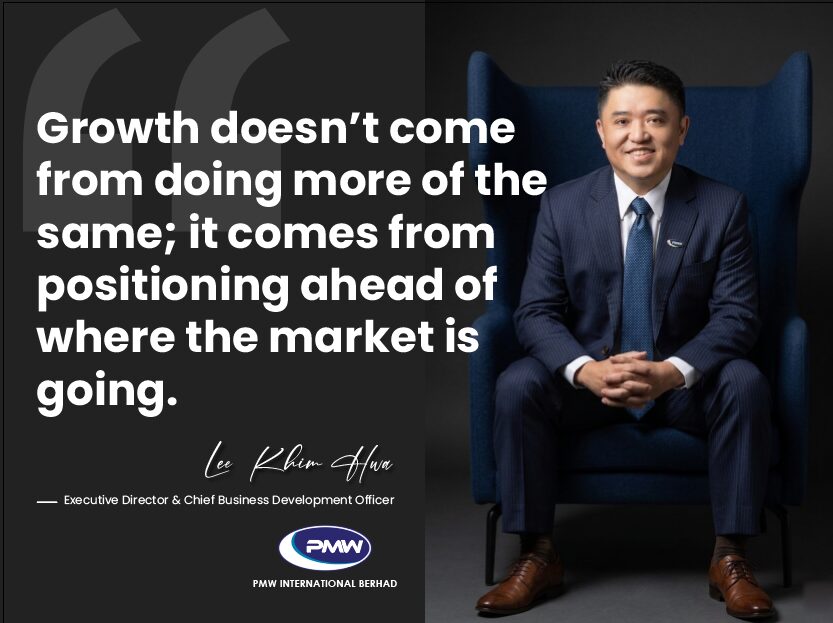
By Lee Khim Hwa, Executive Director & Chief Business Development Officer, PMW International Berhad
In the business development world, timing is everything. Strategic pivots succeed not just because they’re well-executed, but because they align with genuine market shifts. At PMW International, we made a deliberate decision two years ago to move beyond our traditional concrete pole business and enter the spun pile market, a decision that’s now validating the power of anticipating infrastructure demand rather than chasing it.
This is a business development case study that might resonate with other Malaysian manufacturers facing similar questions: When is the right time to diversify? How do you build credibility in a new market? And what does it take to win major infrastructure contracts in a competitive landscape?
The Traditional Business Challenge
For more than four decades, PMW operated in the prestressed concrete pole market. We manufactured poles for utilities, telecommunications companies, and infrastructure projects across Malaysia. It was a stable business with established customers and predictable demand.
But stable isn’t always the same as growing.
By 2022-2023, we recognised a challenge that affects many Malaysian manufacturers: mature markets with limited growth headroom. The pole market wasn’t shrinking, but it wasn’t expanding dramatically either. Competition was intensifying. Margins were compressing. And we were essentially playing in a market with a fixed ceiling.
At the same time, we noticed something else: Malaysian infrastructure projects were increasing in scale and complexity, but there was a significant gap in domestic supply chains for specialised foundation solutions. Engineers were still relying on imported spun piles for major projects, despite the availability of domestic manufacturing capability.
This gap became our opportunity.
The Strategic Decision: From Poles to Piles
From a business development perspective, the decision to enter the spun pile market was calculated risk-taking. We had:
- Core competency: 40+ years in concrete product manufacturing and engineering
- Manufacturing capability: Existing facilities and production expertise
- Government credibility: Track record with JKR (Public Works Department) specifications
- Market visibility: Established relationships with contractors and developers
However, we faced specific challenges in West Malaysia:
- West Malaysia market presence: While we were established in East Malaysia (Sabah, Kota Kinabalu) more than 10 years, we were entering the West Malaysia spun pile market for the first time in 2024
- West Malaysia customer references: Our existing project references were concentrated in East Malaysia. However, we had already secured a major breakthrough: the connecting road project from Lebuh Meru Raya (FT240) to the Ipoh–Lumut Expressway (FT005) interchange at Jelapang, Perak, which gave us credibility in the high-specification market
Most manufacturers would see these gaps and conclude the market wasn’t ready. We saw them as barriers to entry that would protect us once we crossed them.
Execution: Building Credibility in a New Market
In mid-2024, we launched our spun pile manufacturing facility in Ipoh, Perak. The strategy was deliberate:
First: Establish quality credentials
We invested in JKR-compliant manufacturing processes, achieved necessary certifications, and treated quality as non-negotiable. In infrastructure markets, you don’t get second chances. One failed project damages credibility permanently. We built the facility with zero tolerance for quality variance.
Second: Build production capability progressively
Rather than trying to win the largest contracts immediately, we started with medium-sized projects that matched our initial production capacity. This allowed us to:
- Develop operational expertise without overcommitting
- Build a reference base of successfully completed projects
- Optimise production processes through real-world experience
- Train teams on foundation solution requirements
Third: Develop government and contractor relationships
We engaged directly with major contractors, project developers, and government procurement offices. We educated the market on the advantages of locally-manufactured spun piles: cost competitiveness, faster delivery, technical support, and compliance with local specifications.
The First Year Results
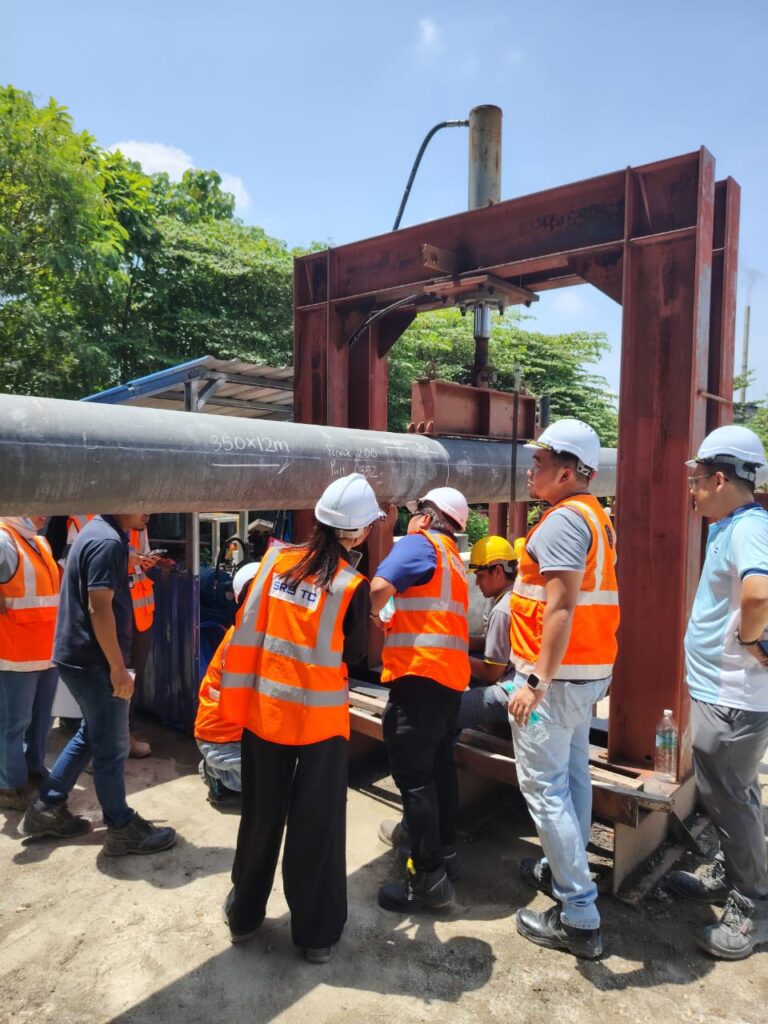
By the end of 2025, our first full year in spun pile operations, we had achieved RM5.86 million in revenue. That’s not massive in absolute terms, but for a new product line in an unfamiliar market, it represented significant market validation.
More importantly, it proved the business model: there was genuine demand for quality, locally-manufactured spun piles.
Then came May 2026. We secured an RM11.92 million contract for the Jelapang-Lumut Expressway project in Perak. In percentage terms, this represented a 103% increase in annual opportunity from our first-year revenue.
But what made this win particularly significant from a business development perspective was what it demonstrated:
Market validation: A major contractor with significant reputation risk chose our piles over imported alternatives
Price competitiveness: We won the contract on merit, not subsidised pricing
Production confidence: The client’s choice reflected confidence in our facility’s ability to execute a large-scale order
Market timing: The contract proved the infrastructure demand cycle is real and active
What This Means for Other Malaysian Manufacturers
The PMW experience offers several lessons for manufacturers considering strategic pivots:
- Identify gaps in domestic supply chains
Don’t assume all viable markets are already being served efficiently. Look at what Malaysian companies are importing out of necessity rather than preference. That’s often where the best domestic opportunities hide.
- Leverage existing core competencies rather than starting from zero
Our move from poles to piles worked because we weren’t entering an unfamiliar industry, we were applying existing expertise to a related market. Your best new markets are often adjacent to what you already know.
- Build credibility through progressive execution
You don’t need to win the biggest contract first. Win progressively larger projects that allow you to build confidence with customers and develop operational expertise simultaneously.
- Time your growth acceleration with market cycles
The infrastructure boom we’re experiencing now creates a window of opportunity. The companies that win are those that recognise when the market is shifting and position ahead of peak competition.
The Broader Infrastructure Opportunity
What excites me most isn’t just the Jelapang contract. It’s what it represents: the beginning of a multi-year infrastructure cycle in Malaysia.
The government has committed to significant infrastructure investments through 2030:
- Highway expansions and maintenance (Greater Ipoh corridor, East Coast development)
- Data centre construction (Malaysia’s digital infrastructure play)
- Industrial park development (supply chain diversification)
- Utility infrastructure (water, power, telecommunications)
Each of these requires foundation solutions. Each creates sustained demand across multiple years, not just individual projects.
The manufacturers that position themselves as specialised infrastructure suppliers, not generalists, will capture disproportionate value from this cycle.
What We’re Doing Next
At PMW, we’re doubling down on infrastructure:
- Capacity expansion: Our Ipoh facility is ramping to support larger projects
- Geographic diversification: Launching a spun pile facility in Sarawak by year-end to capture East Malaysia demand
- Market education: Actively working with contractors and developers to build awareness of our capabilities
- Product innovation: Developing specialised pile solutions for unique project requirements
But the most important thing we’re doing is executing flawlessly on existing contracts. One failed project would undermine years of trust-building. Execution is our competitive advantage.
The Business Development Takeaway
From a business development perspective, the PMW story demonstrates that strategic pivots can succeed if they’re based on:
✓ Real market gaps (not imagined opportunities)
✓ Existing core competencies (not untested new capabilities)
✓ Progressive execution (not heroic first projects)
✓ Clear market timing (not premature entry)
✓ Relentless quality focus (not cost-cutting)
Malaysia has been experiencing waves of manufacturing growth for decades. But the next wave isn’t coming from consumer-facing exports or commodity manufacturing. It’s coming from infrastructure specialisation.
The companies that recognise this shift and position themselves as infrastructure solution providers, not generic manufacturers, will be the growth leaders of the next five years.
For PMW, the Jelapang contract isn’t a victory lap. It’s validation that we’ve positioned ourselves correctly at the beginning of a major infrastructure cycle.
The real growth is still ahead.