
Building from the Ground Up: Choosing the Right Piling System for Infrastructure Projects
In infrastructure development, the success of a project often depends on what lies beneath the surface.
From high-rise buildings and bridges to industrial facilities and urban developments, the foundation system plays a critical role in ensuring structural stability and long-term performance.
“In infrastructure development, what lies beneath the surface often determines the long-term success of the entire project.”
Selecting the right piling solution is more than an engineering decision. It directly influences construction timelines, project cost efficiency, and long-term structural reliability.
In Malaysia, this decision becomes even more important due to the country’s diverse soil conditions—ranging from soft marine clay to limestone formations. To address these challenges, engineers commonly rely on two deep foundation systems: Spun Piles and Bored Piles.
Each solution offers unique advantages depending on site conditions, structural load requirements, and project constraints.
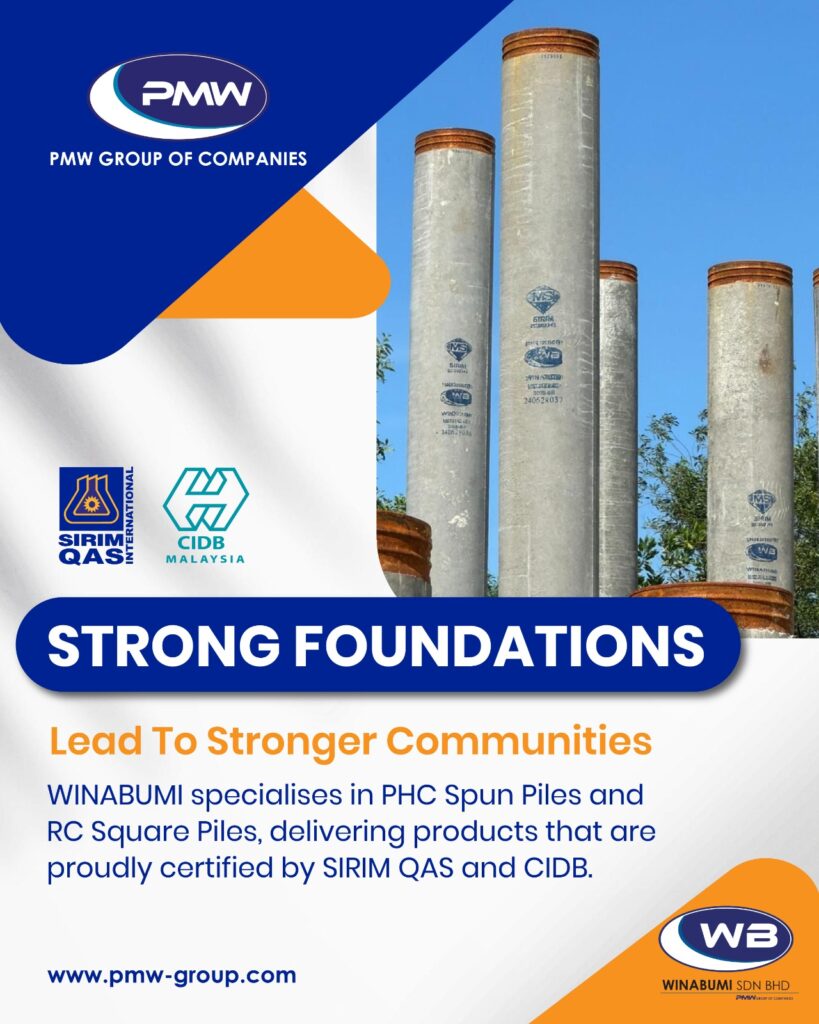
Spun Piles: Strength with Speed and Consistency
Spun piles, also known as Prestressed High-Strength Concrete (PHC) piles, are precast piles manufactured in controlled factory environments using a centrifugal spinning process.
In this process, concrete is poured into a cylindrical mold and spun at high speed. The centrifugal force distributes the concrete evenly along the mold, forming a dense hollow cylindrical structure with excellent strength and durability.
Steel strands are tensioned within the mold before casting. Once the concrete cures, these prestressed strands create compressive forces within the pile, significantly improving its load-bearing capacity and resistance to bending.
The piles are then cured under controlled conditions to ensure consistent structural performance and long-term durability.
PMW Winabumi’s spun piles are designed to support infrastructure, utilities, and industrial developments across Malaysia, particularly in areas with challenging soil conditions.
Key Advantages of Spun Piles
Consistent Quality
- Manufactured in controlled factory environments, spun piles deliver reliable structural integrity with uniform dimensions and material quality.
High Strength and Durability
- The centrifugal casting process compacts the concrete, reducing internal voids and producing high-density piles capable of withstanding heavy loads and harsh soil conditions.
Efficient Installation
- Spun piles are driven directly into the ground using hydraulic hammers or vibratory drivers, allowing for faster installation and improved construction efficiency.
Long-Term Reliability
- The dense concrete structure provides excellent resistance to corrosion, moisture, and environmental exposure, making spun piles suitable for long-term infrastructure use.
Common Applications of Spun Piles
Due to their high strength, durability, and installation efficiency, spun piles are widely used across various infrastructure and construction projects.
Building Foundations
- Suitable for high-rise buildings, commercial developments, and industrial facilities where deep foundation support is required.
Infrastructure Projects
- Commonly used in bridges, highways, railway structures, and other large-scale civil engineering works.
Marine and Coastal Structures
- Their dense concrete structure offers strong resistance to water exposure and corrosive environments, making them ideal for ports, jetties, and waterfront developments.
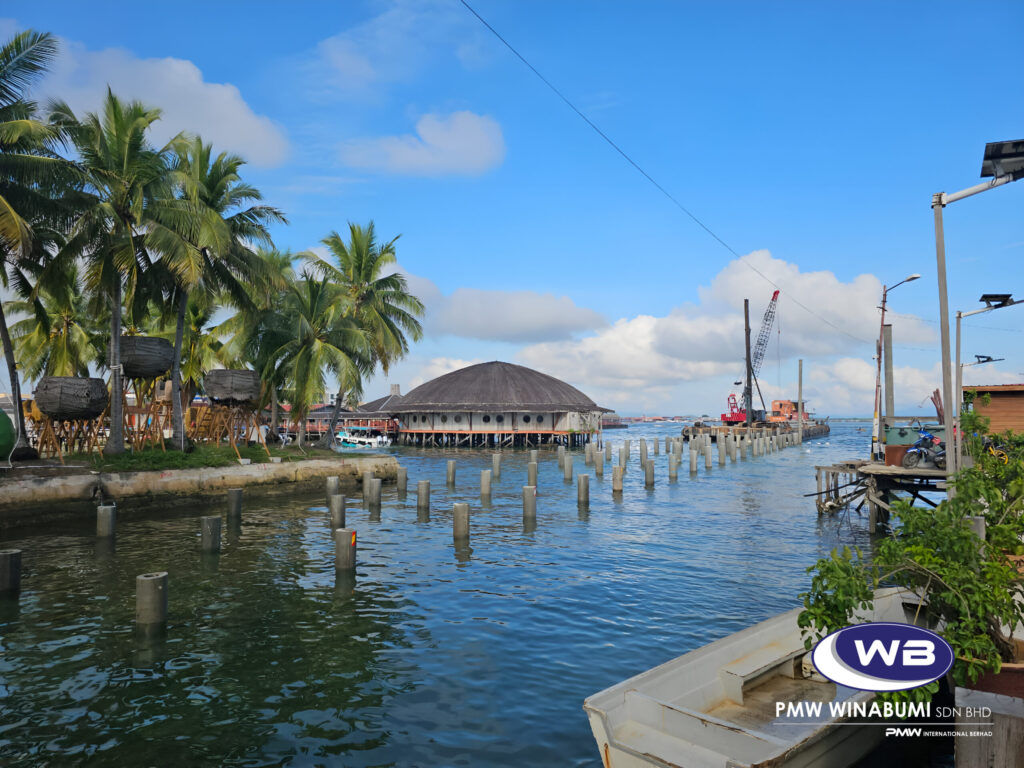
“Spun piles combine high structural strength with fast installation, making them the preferred solution for large-scale infrastructure projects.”
These advantages make spun piles particularly suitable for high-rise buildings, industrial developments, and essential utility structures.
With years of experience supporting infrastructure projects, PMW Winabumi continues to work closely with engineers, consultants, and developers to ensure the right piling solutions are applied to the right site conditions.
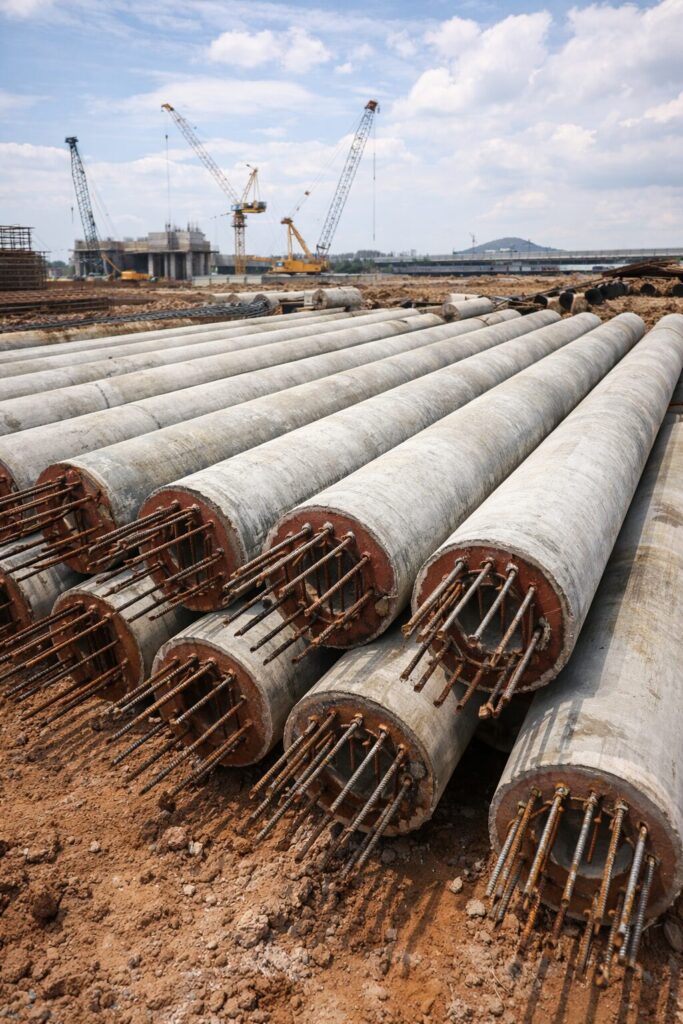
Bored Piles: Flexibility for Complex Structural Loads
Unlike precast piles, bored piles are constructed directly on site through a drilling process.
A hole is drilled to the required depth, followed by the installation of reinforcement cages and concrete casting. This method allows engineers to create piles with larger diameters and deeper foundations, making them suitable for projects with heavy structural loads.
Key Advantages of Bored Piles
Minimal Vibration and Noise
- Because bored piles remove soil rather than displacing it, they generate significantly less vibration—making them suitable for urban construction environments.
High Load Capacity
- Their large diameter design allows bored piles to support heavy structures such as high-rise buildings and bridges.
Flexible Depth Design
- Engineers can extend drilling depth to reach stronger soil or rock layers when required.
Making the Right Foundation Decision
Choosing between spun piles and bored piles depends on several project factors, including:
- Soil conditions
- Structural load requirements
- Site accessibility
- Environmental constraints
- Construction timelines
Spun piles are often preferred for projects that require fast installation and consistent structural performance, while bored piles are typically selected for large-scale structures with very high load demands or complex site conditions.
“Every successful infrastructure project begins with a strong and reliable foundation.”
With extensive experience in infrastructure solutions, PMW Group of Companies understands the importance of selecting the right foundation system to ensure projects remain efficient, resilient, and built for long-term performance.
Because in infrastructure development, what lies beneath truly matters.
Discover how our infrastructure solutions support reliable and long-lasting developments: https://pmw-group.com/our-business/spun-pile/