
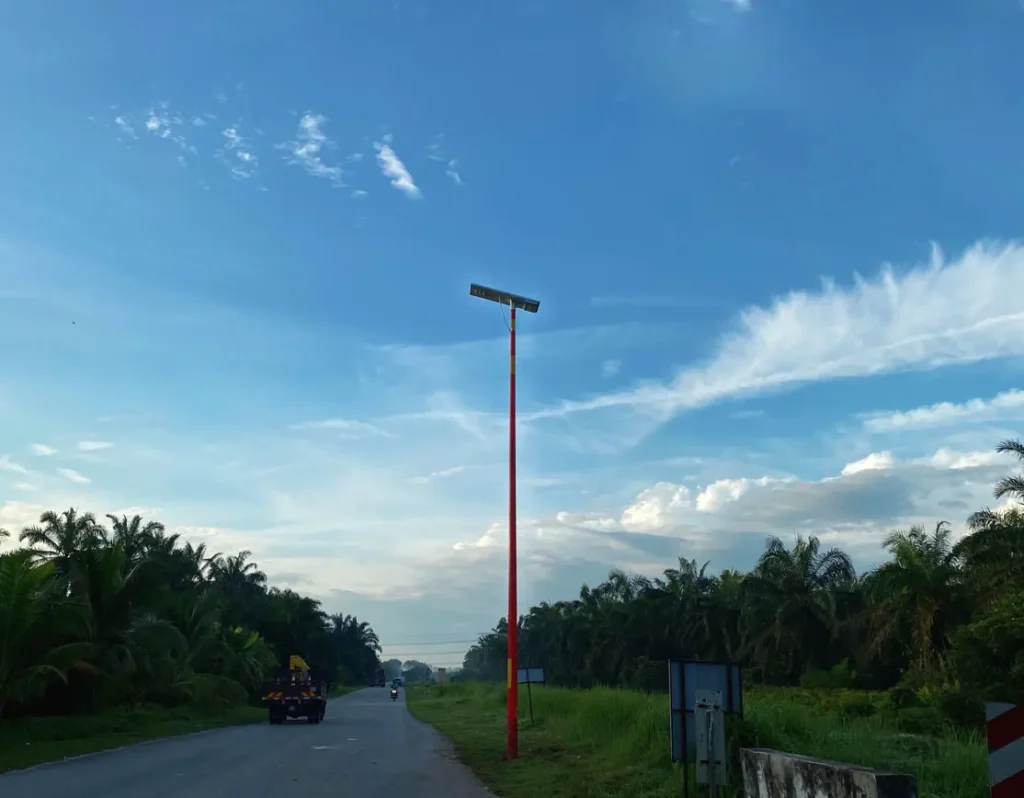
High-performance street lighting is critical for urban safety. Whether illuminating a highway or a commercial parking lot, secure lighting grids rely on high-capacity structural columns. Project stakeholders must clearly distinguish between lightweight residential fixtures and heavy-duty, commercial-grade infrastructure.
This guide provides a complete decision-making framework designed specifically for heavy-duty commercial infrastructure, streamlining material selection, structural requirements, and installation best practices to ensure a lasting foundation for your street light pole projects.
What Makes a Durable Street Light Pole?
By definition, a street light pole is an outdoor structural column engineered to elevate luminaires and distribute uniform illumination across public roads, walkways, and commercial parking spaces. Rather than functioning as a simple post, it is designed as a cohesive assembly of specialized components built to withstand dynamic environmental forces and protect electrical connections over a multi-decade lifespan:
- Base Plate: The structural anchor that mounts the column to the concrete footing.
- Service Door (Handhole): An access point near the base for wiring, splicing, and maintenance.
- Anchor Bolts: High-strength, galvanized steel bolts securing the base plate against wind loads.
- Shaft: The vertical column dictating overall height, flexibility, and structural capacity.
- Arm/Bracket: The horizontal extension that optimizes the light spread over the roadway.
- Tenon: A precise cylindrical top mounting point designed for securing the luminaire.
Action-Oriented Decision Matrix: Material Selection
Selecting the right manufacturing material determines the lifespan, structural capacity, and maintenance cycle of the infrastructure. For commercial projects, high-durability concrete variants outlast traditional metal.
Project Requirement | Recommended Material | Concrete Pole Advantage |
Cost-Effective Infrastructure | Concrete pole | Concrete offers a lower initial capital expenditure compared to steel or aluminum, making it ideal for large-scale, budget-conscious projects. |
High-Corrosion Environments (e.g., Coastal Areas) | Concrete pole | Concrete is inherently immune to rust and galvanic corrosion, ensuring reliability in harsh, saline conditions. |
Maximum Durability & Low Maintenance | Concrete pole | Concrete delivers decades of service life and superior structural integrity without the need for routine anti-corrosion treatments. |
Determining Street Light Pole Specifications
Engineers and planners must establish precise street light pole specifications before procurement to ensure municipal compliance, public safety, and optimal photometric performance.
Height & Placement Considerations
Pole height must balance road width, traffic speeds, and target illumination levels:
- Compound and Pedestrian Lighting: Walkways, residential zones, and car parks typically use poles standing 3.5 to 8 meters tall to keep light localized and clear.
- Roadway and Highway Lighting: Active vehicle pathways require columns standing 6 to 12 meters tall to achieve broad, safe photometric coverage.
Structural Shapes and Aesthetics
Modern poles use distinct geometries to balance physical stability, load distribution, and visual integration. Despite popular beliefs, they are not limited to round or square designs:
- Tapered Poles: Narrowing from base to tip, these reduce top mass, concentrate strength at the base, and efficiently disperse aerodynamic wind loads (EPA).
- Non-Tapered Poles: Keeping a uniform diameter, these offer clean, geometric lines ideal for low-height pedestrian spaces.
- Decorative Poles Options: Fluted designs and custom brackets allow developers to blend structural durability with the historic or architectural theme of the area.
Safety & Structural Standards
Pole specs must account for local wind speeds and the Effective Projected Area (EPA)—the aerodynamic resistance of the attached fixtures and arms. Planners must also specify breakaway or rigid, non-breakaway foundations based on speed limits and how close the pole sits to active, uncurbed roadways.
How Concrete Street Light Poles Are Made
Understanding how to make street light pole assets that withstand environmental wear requires examining advanced casting techniques.
Why Choose Concrete Over Steel?
Unlike steel columns that inevitably rust and degrade in humid, outdoor conditions, concrete poles offer permanent corrosion resistance and exceptional strength, requiring zero routine painting or treatment.
Concrete Pole Manufacturing Process
High-performance concrete poles are engineered through a highly controlled, industrial process:
- Reinforcement: High-tensile steel wires are tensioned inside a heavy-duty steel mold.
- Casting: A high-strength, low-water concrete mix is poured into the mold.
- Centrifugal Spinning: The mold is spun at high speeds. This centrifugal force powerfully compacts the concrete, forcing water out and creating an exceptionally dense, hollow-core structure.
- Curing: The newly formed pole is steam-cured to rapidly achieve maximum compressive strength before undergoing quality control.
Next-Generation Infrastructure: Solar and 5G Integration
As cities adapt to 21st-century technological demands, the traditional street light pole has evolved. Apart from lighting, street light poles can support telecommunications, monitoring systems, and other smart city components, including:
Smart Capabilities and 5G Integration
To support urban connectivity, a modern 5G street light pole is designed with high structural load tolerances and spacious internal conduits. These features allow municipalities to securely house fiber-optic networks and small cell antennas without cluttering the streetscape.
Solar Lighting Pole Sustainability
Off-grid sustainability makes the solar street light pole increasingly popular. However, adding solar panels, brackets, and heavy batteries introduces up to 43kg of top mass to a standard 120W setup. This high top-load significantly increases the overturning moment and wind resistance of the structure, requiring thicker concrete shafts, higher wind-load capacities, and deeper foundations to prevent tipping.
How to Install a Street Light Pole: Logistics & Planning
Knowing exactly how to install street light pole units prevents catastrophic foundation failure, electrical code violations, and costly installation delays.

Installation Context and Mounting Methods
Prior to installation, contractors must verify local soil conditions, electrical codes, and connection requirements. The industry relies on two mounting methods:
- Direct Burial (Planted type): The pole is embedded directly into an augered hole and backfilled with compacted stone or concrete, saving on foundation and hardware costs.
- Anchor Base (Flange Mount): The pole’s base plate is secured with heavy bolts to an independent concrete footing. While costlier to construct, this method allows for easier leveling adjustments and quick pole replacement if damaged.
Common Installation Errors
A dangerous error is improper footing sizing—pouring concrete foundations too shallow or narrow for local soil and wind load demands. Additionally, placing heavy poles onto anchor foundations before the concrete has fully cured can cause bolt pullout and immediate structural collapse.
Sourcing Your Infrastructure: PMW Group & PMW Lighting
Bringing a complex urban lighting project to life culminates in the procurement phase—the final and often most critical hurdle. At this stage, choosing a highly reliable, proven manufacturer is essential for securing high-quality infrastructure that meets the demands of both local municipal works and large-scale international developments.
The PMW Ecosystem & Industry Capabilities
PMW Group (PMW International Berhad) is a recognized leader in the infrastructure development sector, specializing in the manufacturing and supply of high-quality concrete poles, piles, machines, moulds, and lighting. With over 40 years of experience, advanced centrifugal spinning technology, and a daily manufacturing capacity exceeding 1,100 poles and piles, PMW serves utility providers, telecommunications giants, and major contractors across Malaysia and over 18 countries globally.
Our commitment to innovation ensures defect rates of less than 0.5%. For developers and contractors in Malaysia and beyond who are seeking a reliable supplier of street light pole systems, PMW Group and PMW Lighting serve as a complete, end-to-end one-stop solution provider. By pairing high-efficiency Solar/ LED street lighting fixtures from PMW Lighting with PMW Group’s highly durable prestressed spun concrete poles, contractors can achieve a fully integrated, incredibly reliable outdoor lighting system that minimizes long-term maintenance costs and maximizes public safety.
Seamless Utility Connections
Whether your project requires a standard lighting setup, a heavy-duty power distribution pole, a standard utility pole, or dedicated utility columns like the official TNB pole and TM pole, PMW has the manufacturing capacity to deliver on schedule.
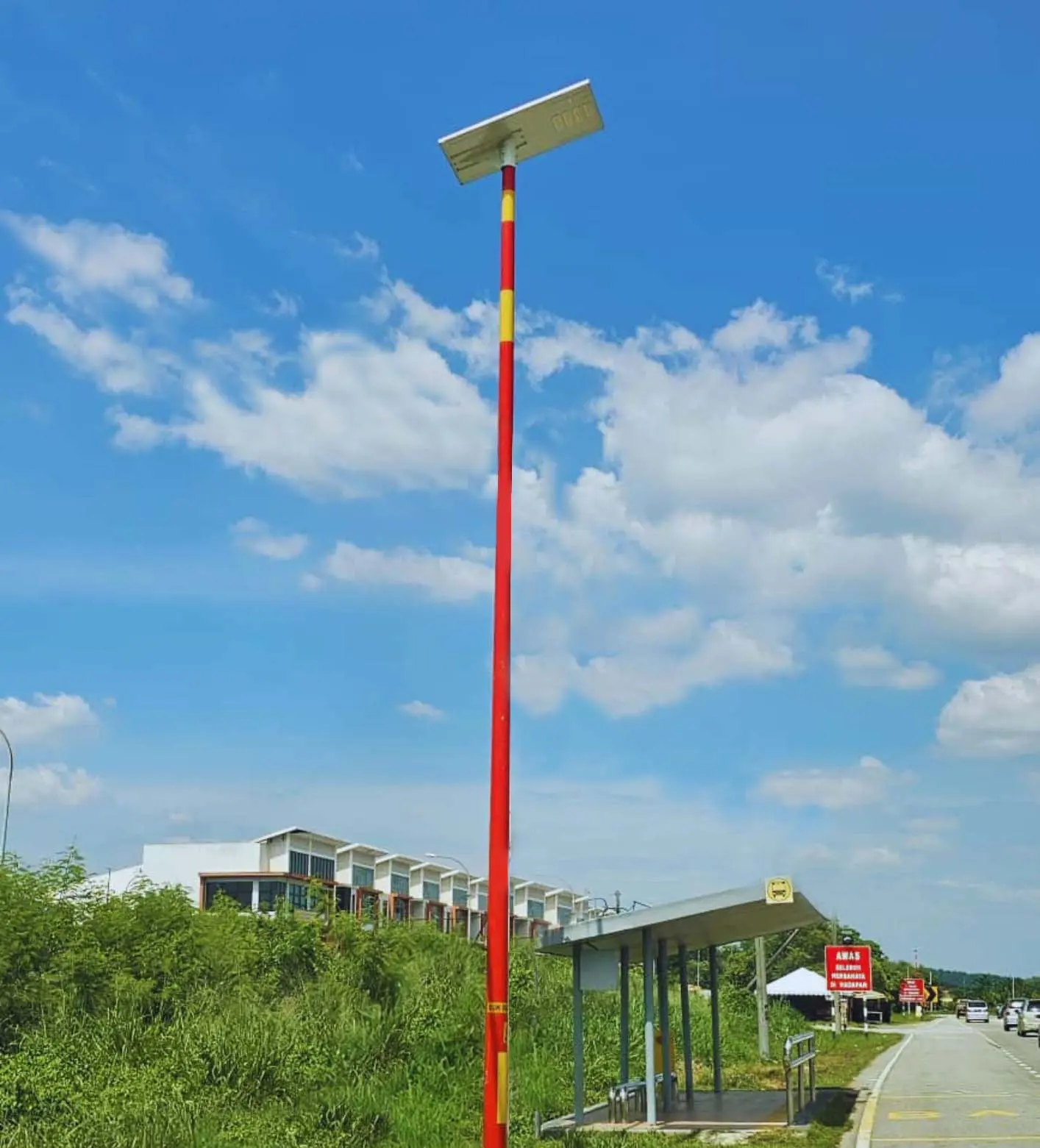
Ensure your next major infrastructure project is built on a solid foundation. Consult PMW Group and PMW Lighting today for tailored, heavy-duty infrastructure solutions perfectly designed to brighten and secure the future of your development.