
Concrete Pole: Backbone of Modern Utility Infrastructure
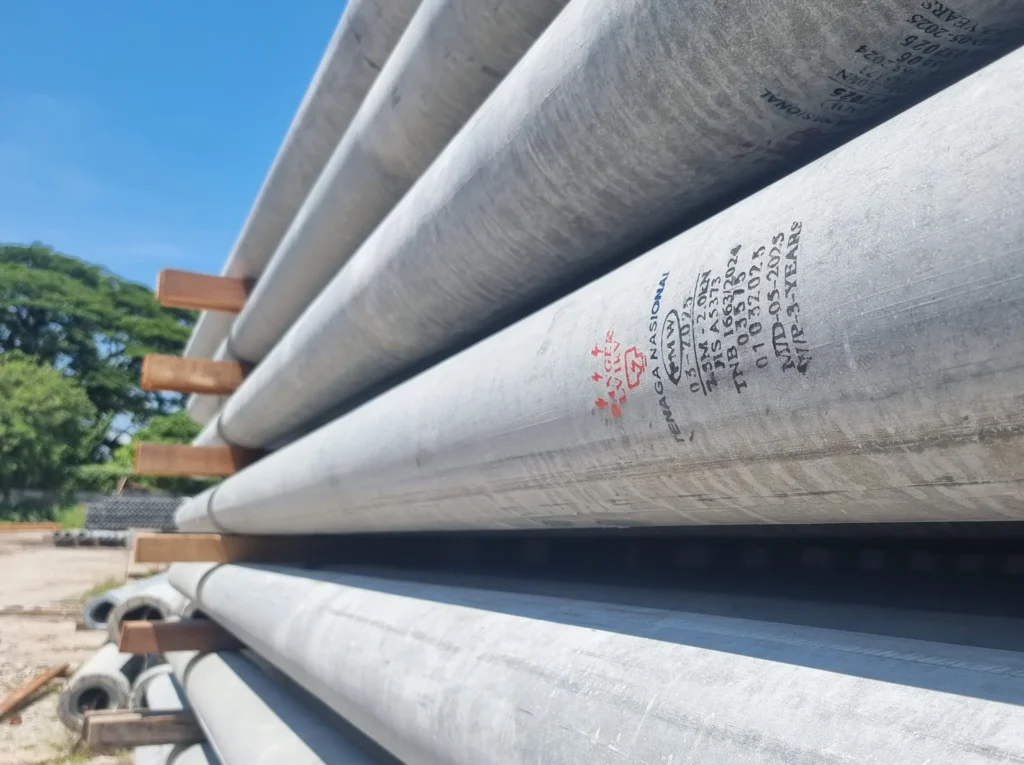
In the evolution of modern infrastructure, the landscape is shifting. Traditional timber poles that once lined the streets are fading into history, and while steel remains a contender, it battles constant corrosion. Enter the spun concrete pole—a superior alternative that has become the backbone of reliable utility networks. As Malaysia and the world upgrade to smarter grids and faster telecommunications, understanding the spun concrete pole specification becomes essential for engineers and city planners alike.
A spun concrete pole is not just a block of cement; it is a precision-engineered, reinforced, and hollow structure manufactured using centrifugal force. This advanced production method creates a pole that combines the compressive strength of concrete with the tensile flexibility of steel, resulting in a product uniquely suited for the demands of modern infrastructure.
The Fundamentals: How Concrete Poles Are Made
The manufacturing process of a spun concrete pole is a testament to engineering ingenuity. It involves several critical steps:
1.) Cage Assembly: High-tensile steel wires are woven into a precise cylindrical framework. This steel skeleton is the secret to the pole’s ability to bend without breaking.
2.) Mould Preparation: The completed steel cage is placed inside a heavy-duty steel mould.
3.) Concrete Feeding: A high-strength concrete mix is poured into the mould, which is then sealed and moved to the centrifugal spinning machine.
The "Spun" Difference
Inside the centrifugal spinning machine, the mould is spun at high speeds, generating massive centrifugal forces. This force flings the wet concrete against the inner wall of the mould, compacting it to an incredible density. The spinning process forces air voids and excess water to the center, creating a perfectly hollow core.
The result of this particular process is prestressed spun concrete—a material that is far denser and stronger than standard cast concrete. By using high-tensile steel wires that are tensioned (prestressed) before casting, the pole is actively compressed, giving it exceptional resistance to cracking under heavy load.
Key Benefits of Spun Concrete Poles
Why are utility providers switching to spun concrete poles? The advantages are structural and economic:
- Durability: The centrifugal compaction creates concrete with extremely low permeability. In simple terms, water and air cannot penetrate the dense surface to corrode the internal steel reinforcement. This makes the prestressed spun concrete pole ideal for coastal areas with high salinity or tropical climates with heavy rainfall.
- Strength-to-Weight Ratio: The hollow core significantly reduces the weight of the pole compared to a solid square pile, without sacrificing structural integrity.
- Aesthetics: Unlike the rough finish of cast-in-situ structures, spun poles have a smooth, uniform surface that blends well with urban environments.
- Maintenance: They are virtually maintenance-free. There is no wood rot to treat and no rust to paint, drastically reducing operational costs in the long term
Standard Spun Concrete Pole Specifications and Sizes
To accommodate various utility needs, spun concrete pole specifications are standardized yet flexible.
- Standard Sizes: In Malaysia and globally, these poles typically range from 6.7m to 14.0m in length. These poles generally feature a standardized top diameter (commonly 100mm, 140mm or 190mm) and a tapered body. A key characteristic is the continuous hollow cavity running the length of the pole, serving as a protected conduit for internal wiring and grounding.
- Customization: The concrete pole design can be tailored. Pole size, pole shape, painting and finishing can be adjusted to meet specific requirements, whether for a light street lamp or a heavy transmission cable.
- Compliance: Reputable manufacturers ensure their poles adhere to strict international and local standards, such as SIRIM Approval, Sijil Guna Pakai TNB, JKR JMAL/ EMAL, TM Certification etc, ensuring safety and uniformity
Load Bearing Capacity and Structural Integrity
The magic of prestressed spun concrete lies in its reaction to stress. The internal prestressing allows the pole to withstand high bending moments caused by strong winds or the tension of heavy cables.
Unlike rigid structures that might snap under pressure, a spun concrete pole possesses a calculated degree of elasticity. It can flex under temporary loads and return to its original position without permanent deformation. This is a significant upgrade over standard reinforced concrete (RC) poles, which are prone to cracking under similar stress.
Spun Concrete Pole Applications in Modern Infrastructure
The versatility of the spun concrete pole makes it ubiquitous in today’s development projects. Some of the notable applications of spun concrete poles include:
- Power: Suitable for low to medium distribution poles and transmission poles.
- Telecommunications: Provides support for fiber optics poles, monopoles, and serves as the structural base for 5G Smart Poles.
- Lighting: Ideal for street lighting poles and compound lighting poles.
Logistics: Is Transportation and Installation Difficult?
One common myth is that concrete poles are heavy and difficult to handle during transportation as well as installation. In reality, the hollow core design makes them surprisingly manageable.
During transportation, their consistent cylindrical and tapered shape allows them to be stacked efficiently on trucks, optimizing logistics.
The installation of spun concrete poles is a standardized and rapid process, provided the right machinery and expertise are on-site. The workflow begins with Site Preparation and Inspection to ensure ground stability and verify the structural integrity of the pole. This is followed by Excavation, where an auger is used to drill a precise hole to the required depth. During Lifting and Positioning, a crane maneuvers the pole into place, where it is either secured via Direct Embedment into the earth or Flange Mounting onto a pre-constructed concrete footing. Finally, the process concludes with Setting and Backfilling, where the base is reinforced with soil or aggregate to ensure a permanent, level fix. With this streamlined approach, a professional team can efficiently install multiple poles in a single day.
Cost-Effectiveness and ROI of Spun Concrete Poles
For utility infrastructure in Malaysia, spun concrete poles are widely recognized as the most cost-effective long-term solution. While steel poles can involve higher material costs and ongoing corrosion protection, spun concrete poles offer a balanced upfront investment with significantly lower lifecycle costs.
Concrete poles are inherently resistant to corrosion, termites, moisture, and tropical weathering, resulting in minimal maintenance requirements and long service life. Steel poles, by contrast, typically require periodic surface protection or recoating to maintain durability in humid and coastal environments.
With their proven structural reliability and low maintenance demands, spun concrete poles deliver strong return on investment over decades of service. This durability and reduced upkeep make them the preferred and most economical choice for utility assets across Malaysia, particularly in demanding environmental conditions.
Choosing Reliable Spun Concrete Pole Manufacturers
Not all poles are created equal. The quality of the final product depends entirely on the manufacturing environment. When selecting a partner for critical infrastructure, consider these key factors:
Quality Control
Reliable spun concrete pole manufacturers operate in factory-controlled environments where curing temperatures, concrete mix ratios, and spinning speeds are strictly monitored. Look for ISO 9001 to ensure a consistent management system.
Compliance & Certifications
Ensure the manufacturer adheres to relevant standards such as SIRIM Approval, Sijil Guna Pakai TNB, JKR JMAL/ EMAL, TM Certification etc. Certification bodies provide third-party verification that the poles meet safety and performance benchmarks.
Technical Engineering Support
Top-tier manufacturers don’t just sell poles; they offer engineering solutions. This includes assistance with load calculations, foundation design recommendations, and customization for specific project needs (e.g., non-standard lengths or higher load classes).
Logistics & Delivery
For large-scale infrastructure projects, supply chain reliability is key. Manufacturers like PMW Group have the production capacity, extensive stock levels, and established logistics networks to ensure that project timelines are met without delay. Choosing a partner with a proven track record is as important as the product itself.
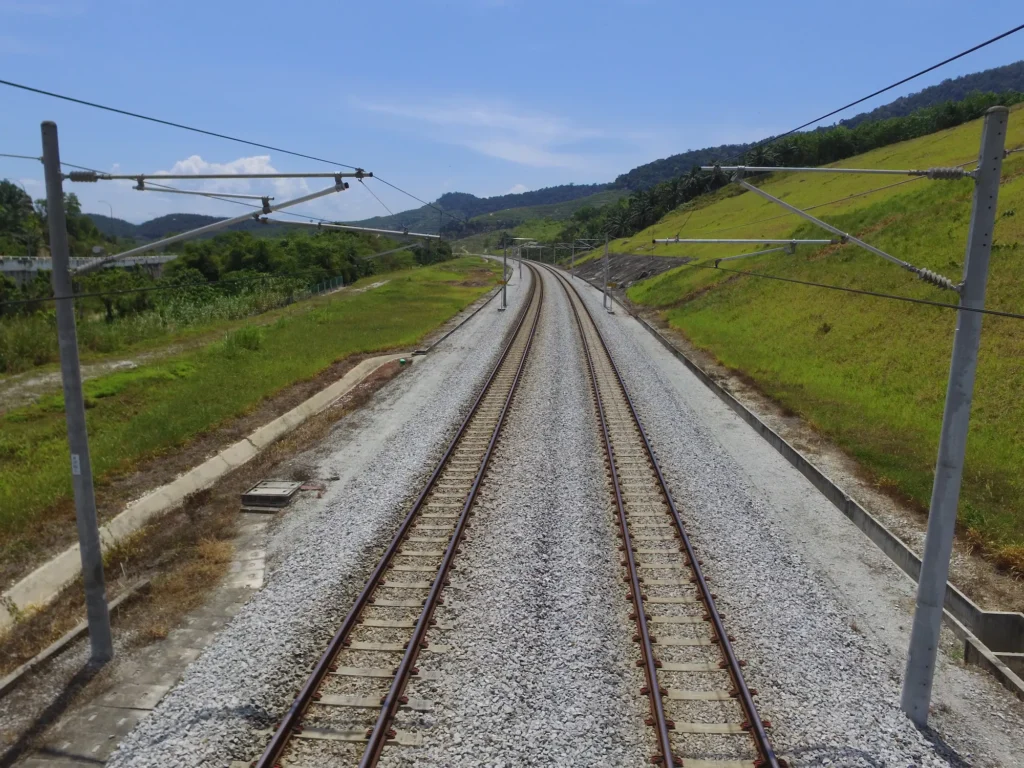
As you may have realized, the spun concrete pole represents the convergence of durability, efficiency, and engineering excellence. It provides the strength needed for critical power lines, the stability required for telecommunications, and the longevity that asset owners demand. As we build the cities of the future, these poles will remain the silent, sturdy sentinels of our utility networks.
For engineers and contractors seeking a partner in building robust infrastructure, PMW International Berhad offers world-class solutions. With state-of-the-art manufacturing facilities and a commitment to quality, PMW Group is ready to supply the high-performance poles your project deserves.
About PMW Group
PMW Group (PMW International Berhad) is a recognized leader in the infrastructure development sector, specializing in the manufacturing and supply of high-quality concrete products. With over 40 years of experience and a daily manufacturing capacity exceeding 1,100 poles and piles, we serve utility providers, telecommunications giants, and major infrastructure contractors across Malaysia and over 18 countries globally.
Our commitment to innovation is reflected in our advanced centrifugal spinning machines and proprietary concrete pole design, ensuring defect rates of less than 0.5%. From prestressed spun concrete poles & piles to comprehensive LED and solar lighting solutions, we are dedicated to building lasting foundations and brightening the future of global infrastructure