
Concrete Pole: Backbone of Modern Utility Infrastructure
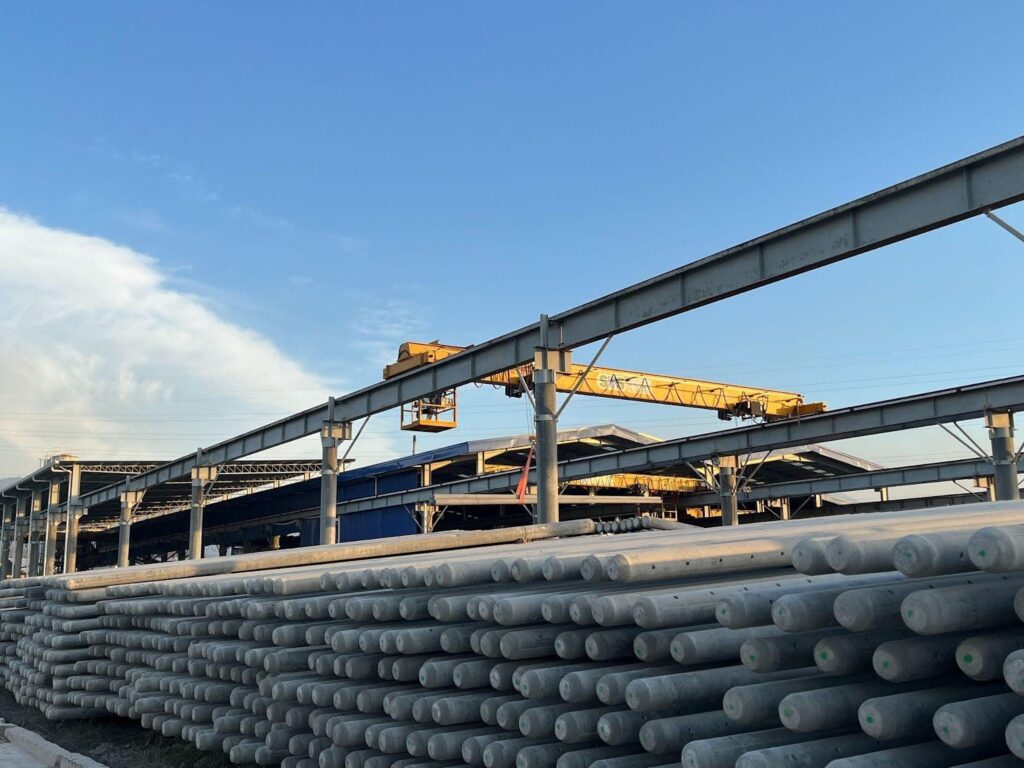
In the rapidly expanding landscape of modern infrastructure, the “concrete pole” plays a pivotal role in delivering essential services. From supporting the high-voltage lines that power our cities to elevating the 5G networks that connect us, these structural elements are indispensable. As Malaysia pushes towards becoming a fully developed nation with smart cities and robust rural electrification, the demand for reliable support structures has never been higher.
For utility providers and major telecommunications giants, the choice of infrastructure is not a matter of cost but of long-term asset management and public safety. Understanding the specifications, manufacturing quality, and installation nuances of a concrete pole is key to ensuring network reliability and longevity.
What is a Concrete Pole?
A concrete pole is a column structure manufactured from reinforced or prestressed concrete, specifically designed to support overhead power lines, street lights, telecommunication cables or antennas, and other critical utility hardware. While timber and steel poles have historically been used, the modern concrete spun pole has emerged as the superior choice due to its exceptional durability, consistency, cost saving and minimal maintenance requirements. The industry standard of today is the prestressed spun concrete pole, a marvel of civil engineering that combines two key technologies:
1. Prestressing
Prestressing involves tensioning the internal high-tensile steel tendons. Once the concrete hardens, the tension is released, transferring a massive compressive force into the concrete. This significantly increases the pole’s crack resistance and load-bearing capacity.
2. Spun Casting
Spun casting is a centrifugal casting process where wet concrete is spun at high speeds, compacting the material to a compaction level far exceeding that of standard cast concrete. This process removes air pockets and excess water, creating a hollow core that reduces weight for easier transportation while maintaining high structural strength.
Concrete Utility Pole Specifications and Sizes
Concrete pole sizes and specifications vary significantly depending on the intended application, ranging from low-voltage distribution in residential areas to high-load transmission lines crossing rugged terrain.
Common Concrete Pole Sizes in Malaysia
For general utility and telecom projects, poles typically range from 7.5 meters to 14 meters in length to provide the necessary ground clearance and safety margins.
- 7.5m – 9.0m Poles: Commonly used as the starting size of TNB concrete poles for domestic electricity distribution (connecting mains to homes) and supporting telecommunication lines. They are also frequently used for street lighting in housing estates.
- 10.0m – 14.0m Poles: Larger poles are essential for higher voltage transmission lines (11kV or 33kV) or areas requiring more vertical clearance, such as highway crossings or industrial zones.
Understanding these concrete pole sizes ensures that contractors select the correct unit to handle the specific mechanical loads specific to their site conditions.
Centrifugal Spinning Manufacturing Process
The superior quality of a modern concrete spun pole is derived from advanced manufacturing technology known as centrifugal spinning. Unlike static casting, this process is dynamic and precise:
1.) Cage Assembly: High-tensile steel wires are cut to length and woven into a precise cylindrical cage. This cage acts as the “skeleton” of the pole.
2.) Prestressing: The steel cage is placed into a heavy-duty steel mould. Hydraulic jacks are used to stretch the steel wires to a specific tension. This stored energy is what gives the pole its flexibility and strength.
3.) Concrete Feeding: A specially formulated high-grade concrete mix is fed into the mould while it rotates slowly. The mix is designed for rapid strength gain and low permeability.
4.) Spinning: The filled mould is moved to a centrifugal spinning machine. Here, it is rotated at high speeds, generating significant centrifugal forces. This force flings the concrete against the inner wall of the mould, compacting it tightly. This action forces excess water, silt and air to the center, leaving a dense, impermeable concrete shell with a smooth outer surface.
5.) Curing: To ensure the pole concrete achieves its design strength rapidly, the poles undergo steam curing. This controlled environment accelerates the chemical hydration of the cement, allowing for faster demoulding and consistent quality control.
Installation: Concrete Footing for a Pole
Proper installation is critical for stability, especially in Malaysia’s varied soil conditions. The method chosen often depends on whether the pole is “planted” (directly embedded) or flange-mounted.
Direct Embedment (Planted)
Most standard utility poles are directly embedded in the ground. This method relies on the soil’s passive pressure to hold the pole upright. A general rule of thumb for concrete footing for a pole in this style is to bury the pole to a depth of roughly 10% of its length plus 2 feet (approx. 0.6m).
For a 9.0m pole, the planting depth is typically around 1.5 meters. The installation process involves:
- Augering a clean hole to the required depth.
- Setting the pole vertically using a crane.
- Backfilling the annular space with a mixture of concrete or compacted aggregate (crusher run). This backfill acts as a locking mechanism, transferring the pole’s load into the surrounding soil.
Flange Mounted
For decorative lighting, streetlights in paved areas, or concrete monopoles that require a clean aesthetic without a buried section, a separate concrete base for a light pole is constructed. This involves a reinforced concrete footing with anchor bolts.
Here are general steps on how to make a concrete light pole base using the flange-mount method:
1.) Excavation: Dig a pit to the required depth. The dimensions are determined by a soil analysis and wind load calculations to ensure the footing doesn’t tip over.
2.) Formwork & Rebar: Install a cylindrical form (like a Sonotube) or timber shuttering. A steel reinforcement cage is lowered into the hole to strengthen the concrete footing.
3.) Anchor Bolt Template: This is the most critical step. Suspend the anchor bolts using a rigid template at the top of the form. The bolt pattern must exactly match the flange of the pole. Misalignment here means the pole cannot be installed.
4.) Conduit Installation: Ensure PVC conduits are placed within the formwork to allow electrical cables to pass through the footing and into the hollow core of the pole later.
5.) Pouring: Pour high-strength concrete into the form, using a vibrator to remove air voids and ensure the concrete tightly grips the rebar and anchor bolts.
6.) Curing & Mounting: Allow the concrete base for a light pole to cure fully (typically 7 to 28 days, depending on the mix design) before mounting the pole. Once cured, the pole is lifted onto the bolts, leveled using nuts, and secured.
Concrete Pole Quality Assurance and Testing Requirements
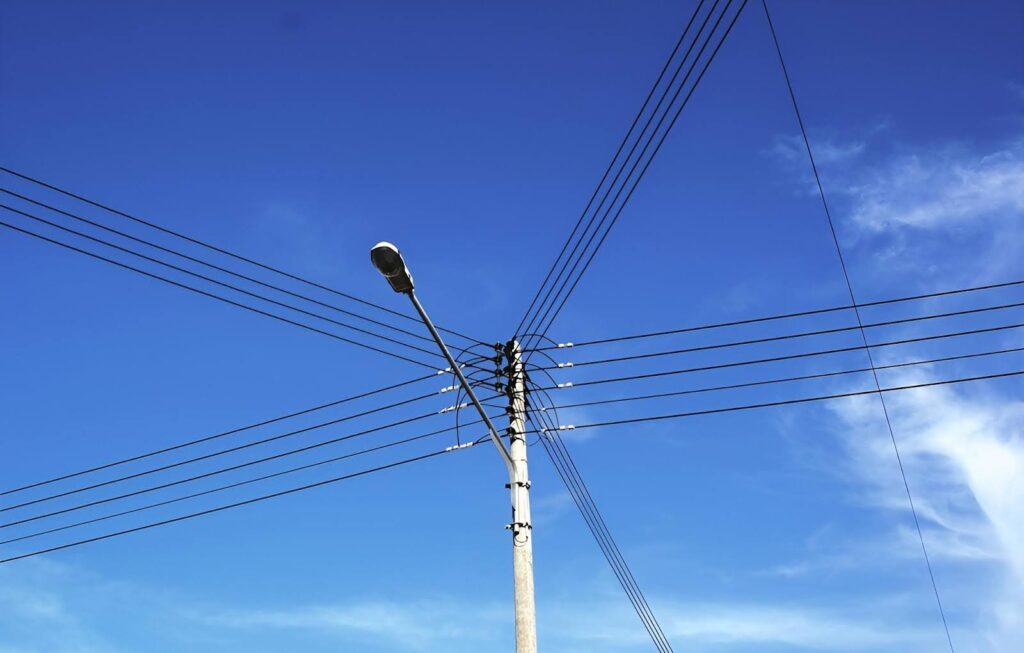
Safety is non-negotiable in infrastructure. To ensure every product meets safety standards, reputable concrete pole manufacturers must adhere to strict quality control protocols. Since dynamic “piling” methods like PDA are typically not used for poles, the industry relies on pole-specific structural tests conducted at the factory to verify integrity.
- Static Load Test (Bending Test): This is the definitive test for pole strength. The pole is fixed horizontally at the planting depth mark. Loads are applied incrementally to the tip using a winch and load cell to simulate wind and cable forces. Deflection is measured at each load step, and the pole is inspected for hair cracks. The pole must meet the breaking load requirements (safety factors are often 2 to 2.5 times the working load) without catastrophic failure.
- Dimensional & Cover Checks: Wall thickness and the concrete cover over the steel reinforcement are rigorously checked. Adequate cover is vital to prevent moisture from reaching the steel, which would cause corrosion and spalling.
- Concrete Cube Tests: Samples of the wet concrete mix are taken during production and crushed in a lab to verify that the compressive strength of the batch meets the high-performance standards.
Whether expanding metropolitan connectivity or upgrading rural electrical infrastructure, service continuity depends on the quality of poles. PMW concrete poles serve as the backbone of the grid, not just as structural columns, but as engineered solutions built to withstand harsh conditions while ensuring long-term resilience and safety for the community.
By partnering with prestressed spun concrete pole manufacturers who prioritize advanced manufacturing, precise specifications, and rigorous testing, utility providers invest in a future-proof infrastructure network that requires less maintenance and delivers consistent performance for decades. To ensure the success of such critical projects, partnering with an industry leader like PMW Group is the strategic path forward.
About PMW Group
PMW Group (PMW International Berhad) is a recognized leader in the infrastructure development sector, specializing in the manufacturing and supply of high-quality concrete products. With over 40 years of experience and a daily manufacturing capacity exceeding 1,100 poles and piles, we serve utility providers, telecommunications giants, and major infrastructure contractors across Malaysia and over 18 countries globally.
Our commitment to innovation is reflected in our advanced centrifugal spinning machines and proprietary concrete pole design, ensuring defect rates of less than 0.5%. From prestressed spun concrete poles & pile to comprehensive LED and solar lighting solutions, we are dedicated to building lasting foundations and brightening the future of global infrastructure.